
Service 07

Hard dig and rock trenching for Arizona's hardest ground

Backhoe hammers, excavator hammers and rock trenchers. When the bucket stops making progress, we have the equipment to keep the trench moving.

In short

Hard dig is ground a standard bucket cannot dig at a normal rate: rock, caliche and heavily cemented soil. Rock trenching is cutting a utility trench through it. Premier Underground does both across Arizona with backhoe hammers, excavator hammers and rock trenchers, then hauls the spoil and finishes the trench.

01 — What it is

What counts as hard dig, and why does it matter?

It matters because it is the most common reason an underground schedule and budget come apart.

Arizona ground is unpredictable. A trench can run through loose desert soil for a hundred feet and then meet caliche, a natural layer of soil cemented by calcium carbonate that can be as hard as concrete, or solid rock. A bucket that was moving steadily starts scraping and bouncing, and production drops to almost nothing.

At that point the job needs different equipment. A contractor who has to go and rent it, or find someone who owns it, loses days. We own it, we move it with our own logistics team and we keep it running with in-house mechanics. Hard dig changes our method. It does not change your contractor.

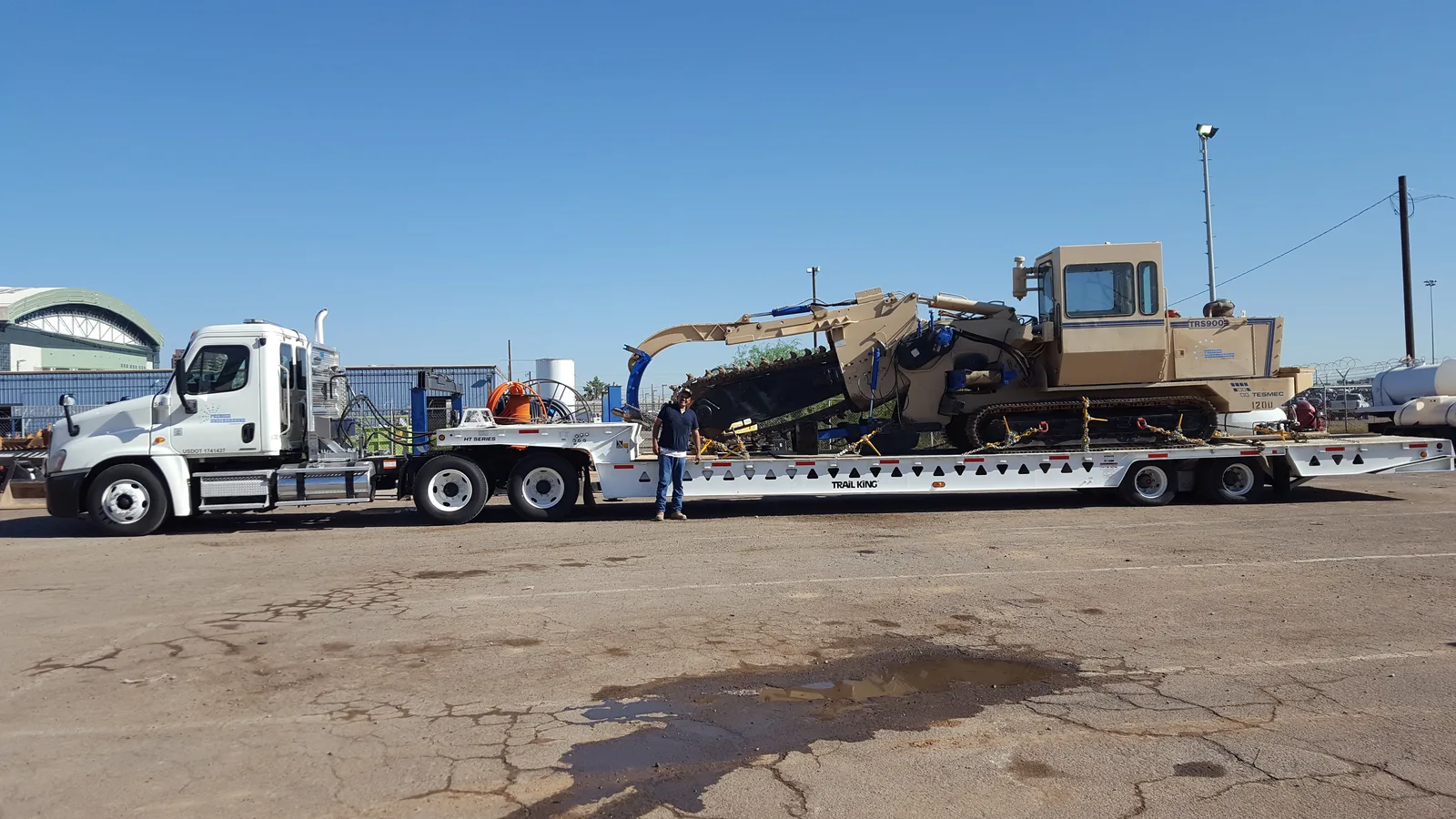
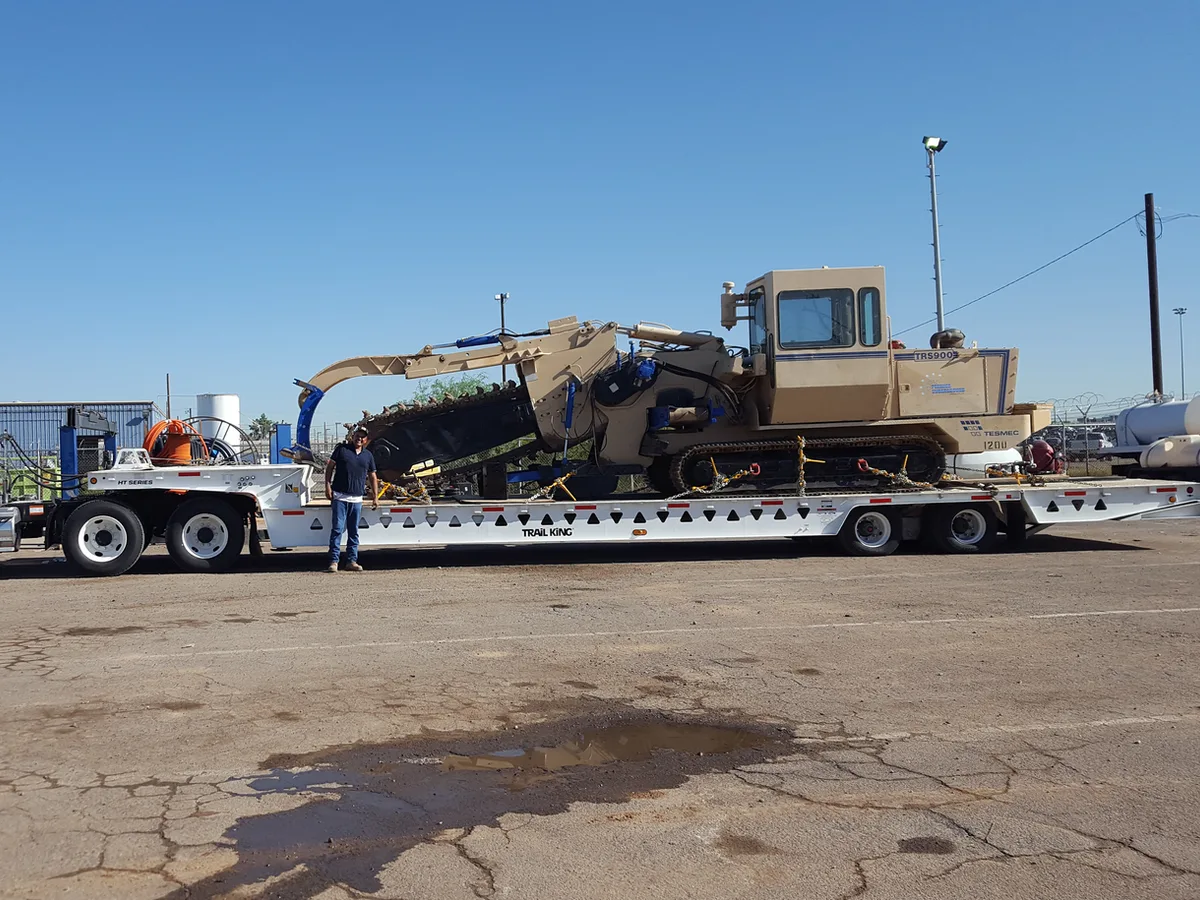
Tracked chain rock trencher loaded on a lowboy trailer behind a Premier Underground tractor
One of our rock trenchers on a lowboy, on its way to a job.

02 — Equipment

Hammer or rock trencher: which is right for your trench?

It depends on how hard the ground is, how long the run is and how much room there is to work. Many jobs use more than one. This is how we think about it.

EquipmentHow it worksWhere it fits best
Backhoe hammerA hydraulic breaker on a backhoe fractures the hard material in place. The same machine swaps back to a bucket to dig it out.Shorter runs, tighter sites, isolated hard spots in an otherwise ordinary trench, and breaking out concrete in the trench path.
Excavator hammerA larger breaker on an excavator delivers more energy per blow and reaches deeper and wider.Deeper trenches, wide duct bank routes and excavations for manholes, vaults and other structures in rock.
Rock trencherA tracked machine drives a toothed cutting chain through the ground and leaves a trench of consistent width behind it.Long, continuous runs in hard ground where steady production matters and the route is open enough for the machine.

Think about the backfill, too

Broken rock is often too coarse to place back around conduit. Check what your specification says about bedding and backfill in rock. On the Iron Mountain Data Center project, the hard dig trenches were backfilled with more than 4,000 cubic yards of ready-mix. We also haul off the spoil that cannot be reused.

Concrete in the way instead of rock?

Sidewalks, footers and pole bases in your path are a different kind of obstruction with a similar answer. We break them out and remove them so they do not delay your progress. See saw-cutting and demolition for cutting, breaking and removal of concrete and asphalt.

03 — Estimating

How should hard dig be priced in an underground bid?

Up front and in the open. Rock that is not in the estimate is still in the ground.

Hard dig produces fewer feet of trench per day and is harder on equipment than ordinary digging, so it costs more per foot. An estimate that ignores it has not removed the cost. It has moved it to a change order in the middle of your schedule.

Our estimators price the real scope, hard dig included. You can help them get it right:

  • Send the geotechnical report or boring logs if the project has them
  • Tell us what earlier phases or neighboring sites ran into
  • Say plainly when ground conditions are unknown, so we can agree how hard dig will be carried
  • Include the bedding and backfill specification for trenches in rock

What preconstruction learns is written into the contract and handed to operations, so the crew that shows up already knows where the hard ground is expected. See how the hand-off works.

04 — Method

How we get a trench through rock.

Same routine as any Premier trench, with heavier equipment and closer attention to the machines.

  1. Preconstruction

    Read the ground

    Estimators review the drawings and any soils information and decide which sections are likely hard dig and which equipment suits them.

  2. Logistics

    Move the equipment

    Hammers and rock trenchers travel on our own trucks with our own experienced CDL drivers, scheduled so the machine arrives when the trench reaches the rock.

  3. Field

    Break or cut, then dig

    The hammer fractures the material for the bucket, or the trencher cuts the trench directly. Each day starts with a job safety analysis, and the trench is inspected daily. Both are recorded digitally.

  4. Fleet

    Maintain as we go

    Rock wears equipment fast. In-house mechanics keep hammers and trenchers working, so equipment failure does not hold up your schedule.

  5. Field

    Bed, backfill and haul

    Conduit goes in on the bedding the specification calls for. The trench is backfilled and the spoil that cannot go back is hauled off in our dump trucks.

  6. Quality

    Inspect and close out

    Quality control visits during the work and walks the finished trench with operations before we call it done.

Our 3-4-5-6 rules for spoil distance, access, trench protection and fall protection apply in rock exactly as they do in soil. Read about safety at Premier.

05 — Proof

Hard dig on a data center schedule.

Iron Mountain Data Center was mission-critical work on an accelerated schedule, and the ground did not cooperate.

Working for Sturgeon Electric and Holder Construction, we cut hard dig trench for the medium- and low-voltage conduits and for a communications bank in a twenty-four 4-inch conduit configuration. The trenches were backfilled with ready-mix.

Data center owners do not move energization dates because of rock. The job is a fair picture of what this service is for: keeping production up when the ground is at its worst. More on our data center work and other projects.

Mission critical · Data center

Iron Mountain Data Center

Sturgeon Electric / Holder Construction

  • 2,500+Ft of hard dig, power
  • 4,100Ft of hard dig, comms
  • 244-inch conduit configuration
  • 4,000+Cu yd ready-mix backfill

Hard dig for medium- and low-voltage conduits and a communications duct bank, on an accelerated schedule.

06 — Quick answers

Hard dig and rock trenching questions.

What does hard dig mean in underground construction?

Hard dig is ground that a standard backhoe or excavator bucket cannot dig at a normal rate, such as rock, caliche or heavily cemented soil. It has to be broken with a hydraulic hammer or cut with a rock trencher before the trench can be opened.

What equipment does Premier Underground use for hard dig?

Backhoe hammers, excavator hammers and rock trenchers. Which one we use depends on how hard the ground is, how long and how deep the trench is, and how much room there is to work.

How do I know if my site has hard dig before I bid it?

A geotechnical report or boring logs are the best indication, along with what nearby projects ran into. Send whatever you have with your request for a quote. Where ground conditions are unknown, say so, and we will talk through how to carry the hard dig in the estimate.

Can you take over a trench another crew could not dig?

Yes. If your own crew or another contractor has hit ground their equipment cannot handle, we can bring hammers or a rock trencher to get through that section, or pick up the rest of the trench.

Do you break out concrete as well as rock?

Yes. Sidewalks, footers and pole bases in the path of a trench are broken out and removed with the same kind of equipment. That work is covered under our saw-cutting and demolition service.

Your job. Your way.

Hit rock? Call before it costs you a week.

Send the drawings and whatever you know about the ground. We will tell you how we would get through it and what it takes.

Premier Underground Construction, LLC
575 N Eliseo Felix Jr Way, Avondale, AZ 85323
623-748-9650 · estimating@premierunderground.com
Serving all of Arizona since 2004