Service 04

Excavation for electric rooms, manholes and vaults in Arizona

Small or large, excavations take expertise. We certify our operators to dig them safely, and we bring the trucks to move what comes out.

In short

Excavation is digging the larger, deeper holes a project needs for its underground structures, as opposed to the long narrow trench that connects them. Premier Underground excavates for electric rooms, manholes, vaults, silos and other installations across Arizona, with certified operators, protective systems, haul-off and backfill handled by one team.

01 — What it is

What is the difference between trenching and excavation?

A trench is long and narrow and carries the conduit. An excavation is the wider, deeper opening where something has to be built or set: the pit for a manhole, the hole for a precast vault, the footprint of a below-grade electric room.

On a dry utility job the two belong together. The duct bank runs from structure to structure, so the trench and the excavations have to meet at the right elevation, on the right day. When one contractor digs both, there is no gap between them to argue about.

When do you need an excavation contractor?

Call us when the underground scope includes structures as well as conduit, when the dig is deep enough to need protection and a plan, or when the volume of spoil is more than the site can hold. We understand construction and the need for all types of excavation, and we will work with you on whatever installation is required to complete the job.

If the structure sits along a route we are already opening, see utility trenching and duct bank and conduit installation. Those scopes are usually priced with the excavation as one package.

02 — What we dig for

Excavations we take on.

From electric rooms to manholes to silos. If it sits below grade and power or communications runs through it, the hole is ours to dig.

01

Electric rooms

Excavation for below-grade electrical rooms and the conduit entries that feed them, coordinated with your electrical contractor's layout.

02

Manholes

Pits for manholes along a duct bank route. On the Phoenix Sky Train segment we worked on, the raceway system included more than 16 of them.

03

Vaults and pull boxes

Openings sized for precast vaults and pull boxes, dug so the structure can be set and the conduits can meet it at the right elevation.

04

Silos

Excavation for silo installations and other structures that need a prepared opening below grade before they can be built.

05

Deep conduit runs

Runs that go well below ordinary trench depth. At Block 23 in downtown Phoenix, the conduits we installed between two basements sat 18 feet down.

06

Other installations

Whatever else the job requires. Bring us the drawing and we will tell you how we would dig it. For lighting pole bases, see site lighting and augering.

03 — Certified operators

Why operator certification matters in an excavation.

An excavation concentrates risk in one place: heavy equipment, an open edge, people working below grade and often live utilities nearby.

That is why we certify our operators, and why training at Premier does not stop once someone has a seat. Our approach is train. equip. monitor. train again.

Whether we are completing a one-day service project or a multi-million dollar data center, our focus on safety does not differ. Field leadership completes a job safety analysis and a daily inspection of open excavations, recorded through our digital system, and every crew member works to the same four core rules.

04 — Method

How we plan and dig an excavation.

The digging is the short part. The planning before it and the checking after it are what keep the structure, and your schedule, where they belong.

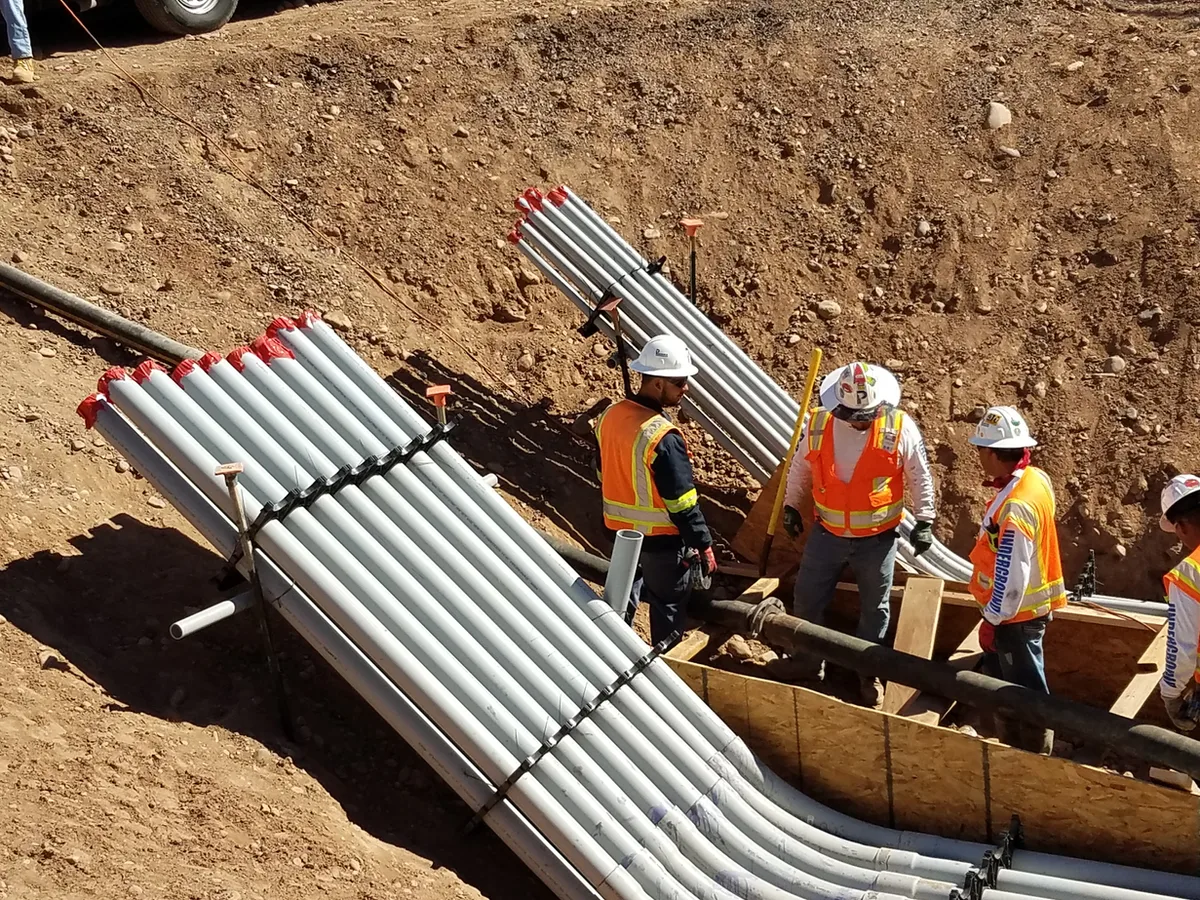
Premier Underground crew in hard hats and hi-vis vests setting banks of grey PVC conduit in a sloped open excavation
Conduit going into a sloped excavation.

What is included

  • Saw-cutting and removal of anything over the dig
  • Excavation to the dimensions on your drawings
  • Protective systems and safe access
  • Hammers for rock and hard ground
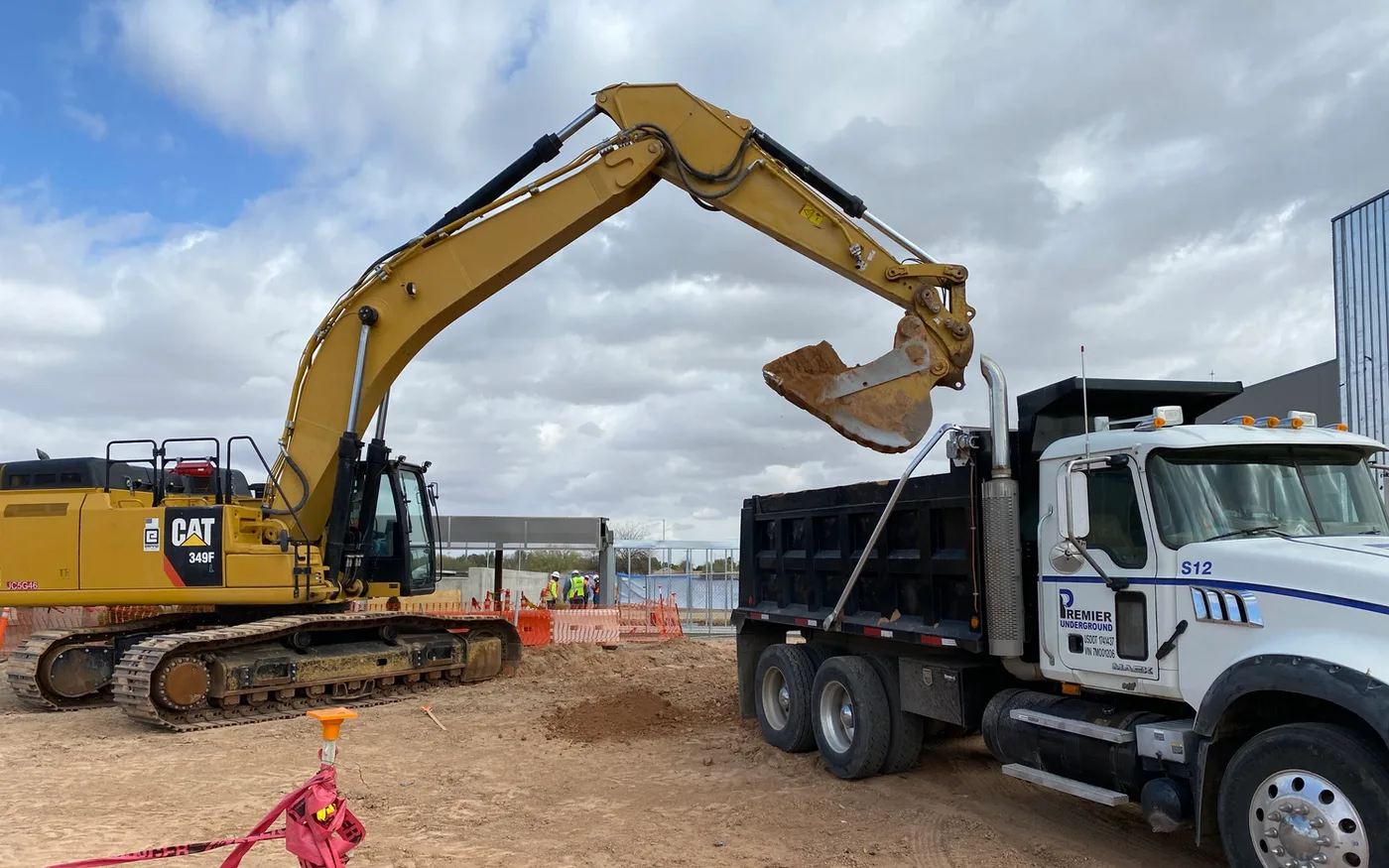
  • Spoils haul-off in our own trucks
  • Backfill, and surface restoration coordinated for you
  1. Preconstruction

    Estimate from the drawings

    Our estimators price the excavation with everything around it: protection, hard ground, hauling and backfill. Accurate cost up front drives good decisions for the rest of the project.

  2. Hand-off

    Pass the plan to operations

    Your requests, schedule and needs are written into the contract and handed to the project manager, so the field builds what was priced.

  3. Logistics

    Move the equipment in

    Our logistics team hauls the excavators and support equipment to site with our own experienced CDL drivers, and schedules dump trucks to match the volume coming out.

  4. Every day

    Analyze, inspect, dig

    A job safety analysis and an excavation inspection are completed and recorded digitally each day. Daily operations meetings keep the dig in step with the trades waiting on it.

  5. Fleet

    Keep machines running

    In-house mechanics maintain our equipment and vehicles, so equipment failure does not become a schedule delay.

  6. Quality

    Verify and close out

    Quality control visits while there is still time to adjust rather than redo, then walks the finished work with operations before close-out.

05 — Proof

Excavation inside a working airport.

The Phoenix Sky Train needed power, propulsion and low-voltage raceways between Terminal 4 and Terminal 3 at Sky Harbor.

Our part was the excavation and installation of that raceway system: a rebar and concrete encased duct bank with more than 16 manholes along it. Every one of those manholes started as an excavation that had to be opened, protected, built in and closed.

It is the kind of job that shows why excavation and conduit belong with one contractor. See more of our project experience, or how we approach aviation work.

Aviation · Phoenix Sky Harbor

Phoenix Sky Train

DP Electric / McCarthy-Hunt JV

  • 16+Manholes
  • 145-inch encased conduits
  • 44-inch encased conduits
  • T4 → T3Segment completed

Excavation and installation of the power, propulsion and low-voltage raceways, in a rebar and concrete encased conduit system.

06 — Quick answers

Excavation questions, answered.

What kinds of excavation does Premier Underground do?

Small and large excavations for underground utility work: electric rooms, manholes, vaults, silos and the other installations a project needs to be completed. Excavation is usually part of a larger dry utility scope that also includes trenching, conduit and duct bank.

Are your equipment operators certified?

Yes. Small or large, excavations take expertise, and we certify our operators to tackle them safely. Training is ongoing at Premier Underground. Our approach is train, equip, monitor, train again.

Do you haul away the excavated material?

Yes. We run our own dump trucks, ranging from 5 to 35 tons, and haul spoils off site as part of the excavation scope or as a stand-alone service.

How do you protect a deep excavation?

We follow four core rules on every job: spoil stays 3 feet back from the edge, a safe way in and out is provided at 4 feet, trench protection is in place at 5 feet, and fall protection at 6 feet. Field leadership inspects open excavations daily and records the inspection digitally.

Can you excavate in rock or hard ground?

Yes. We use backhoe hammers and excavator hammers to break hard ground, and rock trenchers for long runs. If you have soils information for the site, send it with the drawings so the estimate reflects it.

Your job. Your way.

Need a hole in the right place?

Send the drawings for the structure and tell us when it has to be ready. We will price the dig, the protection, the haul-off and the backfill as one scope.

Premier Underground Construction, LLC
575 N Eliseo Felix Jr Way, Avondale, AZ 85323
623-748-9650 · estimating@premierunderground.com
Serving all of Arizona since 2004