We are a turnkey dry utility contractor. Joint trench, conduit, vaults, backfill and restoration for power and communications, built by one team that answers for all of it.
Dry utility construction is the underground work that brings electric power, communications, gas and lighting to a site. A dry utility contractor digs the trench, places conduit, duct banks, vaults and pull boxes to each utility's standards, then backfills and restores the surface so the utilities can pull cable and energize.
01 — Definition
What is dry utility construction?
Every building needs power and a data connection before it can open. In most new Arizona development those lines run underground, in conduit that someone has to put there before the utility or the electrician can pull cable through it. That "someone" is the dry utility contractor.
The work sits between trades. The utility companies design their systems and set the standards. The civil contractor grades the site and builds the wet utilities. The electrical contractor owns the wire and the gear. The dry utility contractor builds the path all of that power and communications cable will follow, and has to satisfy every one of those parties to do it.
That is the job Premier Underground has done since 2004, for projects of all sizes.
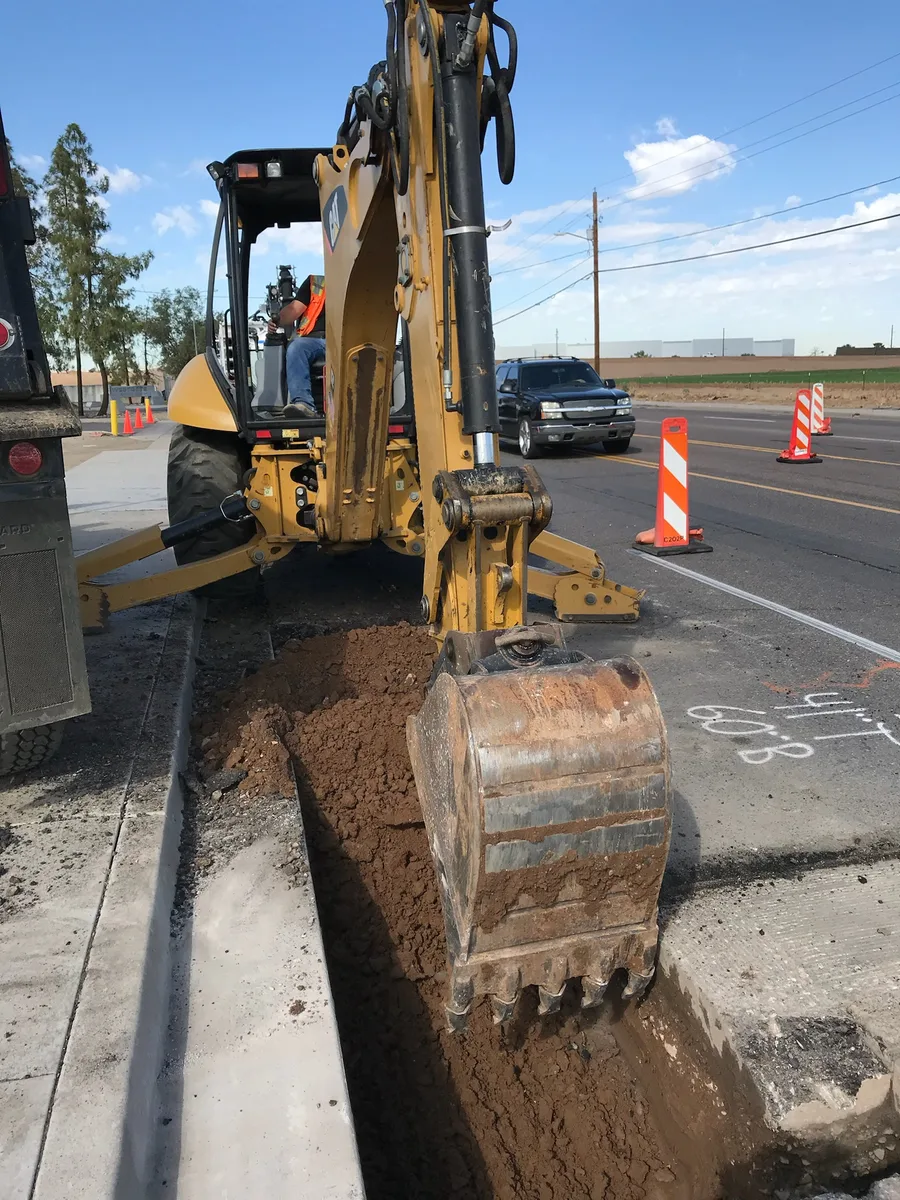
A utility trench opened along a saw-cut road edge.
02 — Dry versus wet
What is the difference between dry and wet utilities?
Dry utilities do not carry water. Wet utilities do. The two are usually separate bid packages, built by different contractors to different standards.
Utility
Type
What goes in the ground
Electric power
Dry
Primary and secondary conduit, duct banks, transformer pads, vaults and manholes
Telephone, cable and fiber
Dry
Communications conduit, pull boxes and vaults
Street and site lighting
Dry
Lighting conduit, pull boxes and pole bases
Natural gas
Dry
Gas main and services, often sharing a joint trench with the other dry utilities
Potable water
Wet
Water mains, services and hydrants
Sanitary sewer
Wet
Sewer mains, laterals and manholes
Storm drain
Wet
Storm pipe, catch basins and retention structures
Premier builds the dry side. If your wet utility or mechanical scope needs trench, excavation, rock work or hauling, we provide those as single services to plumbing and mechanical contractors too.
03 — Joint trench
Joint trench, in plain English.
A joint trench is one trench that several utilities share. Instead of each utility opening its own ditch, they are stacked in a single excavation, each at its own depth.
The serving utilities publish the rules for that trench: how deep each line sits, how far apart they stay from one another, what bedding and shading material surrounds them, and what gets inspected before the trench is closed. The joint trench contractor builds to all of those standards at once.
Done well, a joint trench saves a project real time and money:
One excavation, one backfill and one surface repair instead of several.
Less of the site torn up at any one time, and fewer crossings between utilities.
One contractor coordinating the sequence, so no utility is waiting on another's trench.
The same idea applies on commercial and industrial sites, where power, communications and controls conduit often share a corridor. Where the design calls for it, those raceways are grouped into a duct bank.
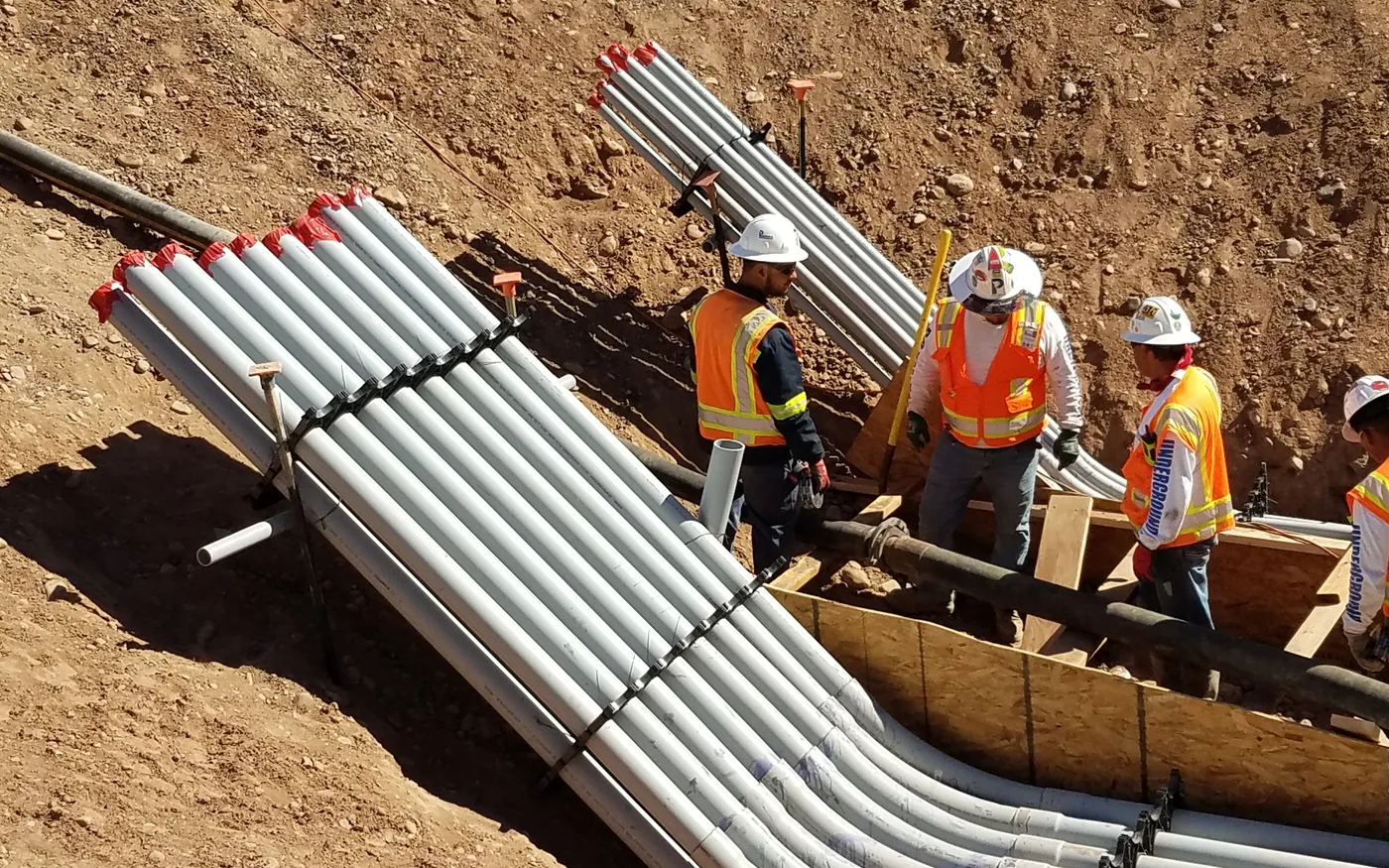
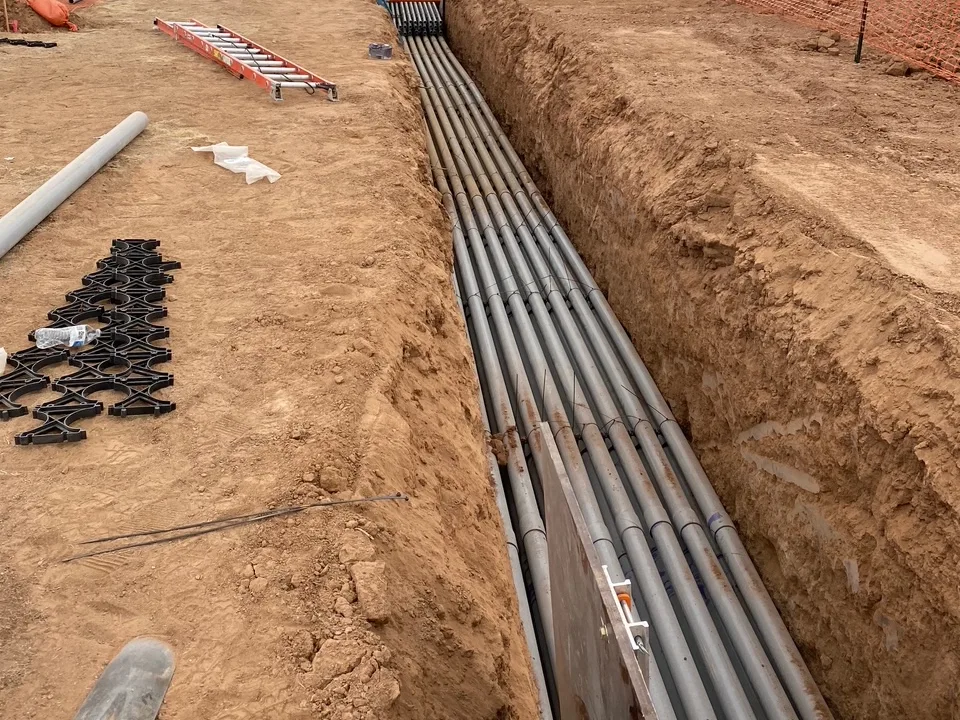
Multiple conduits sharing one trench, held on spacers before backfill.
04 — Cross-section
What turnkey covers, layer by layer.
A finished dry utility trench is eight steps of work. On a turnkey job every one of them is ours. Hover or tab through the list to see where each sits in the ground.
Anyone responsible for getting power and communications to a site. In practice, four kinds of customer call us.
Developers
You need dry utilities in the ground before lots, pads or parcels can be delivered. We build the joint trench and conduit systems for new communities and subdivisions.
Home builders
You need each phase served on the day your trades are ready for it. One contractor for trench, conduit and patch-back keeps the phases from stacking up.
General contractors
You need site utilities off the critical path on a commercial, healthcare or mission-critical job. We take the underground as a complete package.
Electrical contractors
You hold the electrical contract and need the raceway built below grade. We dig, set and backfill it to the drawings and hand it over.
We also work for plumbing and mechanical contractors and for renewable energy contractors. See the markets we serve for how the work changes from one to the next.
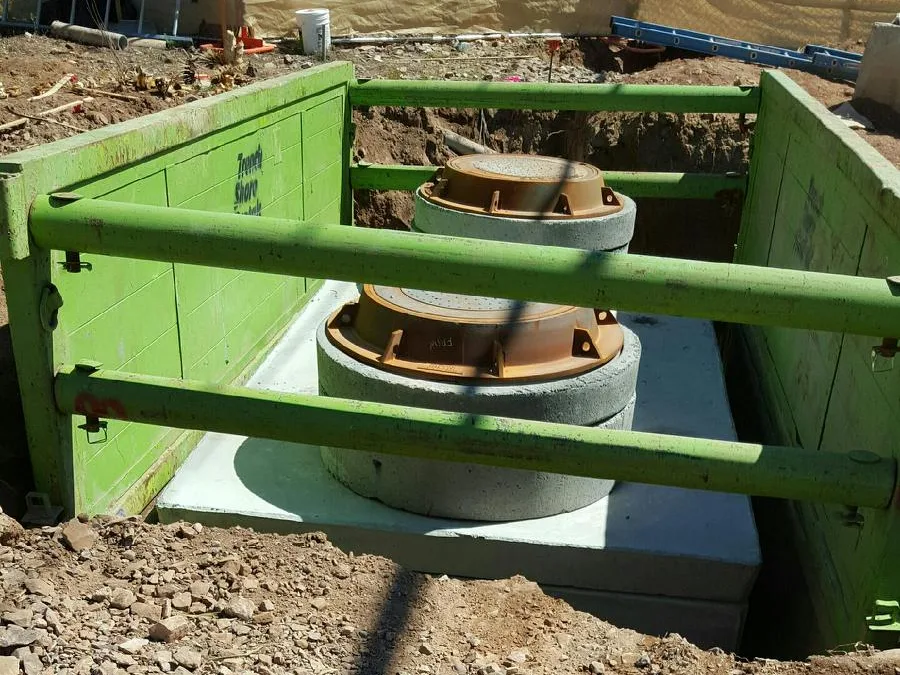
A precast vault set inside a trench shield.
We aim to provide the best team to save customers time and money without compromising quality, safety and productivity.
07 — Method
How we build a dry utility job.
The process is the same on a one-day service call and a multi-million dollar data center. Only the size of the crew changes.
Preconstruction
Price the real scope
Our estimators work from your drawings and the utility designs to price the full job, including the rock, the crossings and the restoration that are easy to leave out.
Hand-off
Put it in writing
Your requests, schedule and needs are written into the contract and handed from preconstruction to the project manager who will run the work.
Procurement
Line up material and equipment
Material is procured early so shortages do not interrupt the job. Equipment, tools and crews are scheduled through our resource management software.
Field
Dig, set and inspect daily
Field leadership completes the daily trench inspection, bore logs and job safety analyses digitally. Daily operations meetings plan the next day's work.
Fleet
Keep the iron running
In-house mechanics maintain our equipment and vehicles, so a breakdown does not turn into a schedule delay.
Quality
Check it while it is open
Quality control visits the site during the work, when a correction is an adjustment and not a redo, then walks the finished job with operations at close-out.
Trenching for a new primary and secondary feed through a highly congested area with critical paths. We installed all underground conduit systems to the specification of the utility provider, Arizona Public Service.
Hospitality · Casino
West Valley Casino, Phase 1
Delta Diversified / Hunt-Penta JV
MVUnderground raceways
AllElectric and low-voltage dry utilities
Medium-voltage underground raceways and all of the electric and low-voltage underground dry utilities for the phase that opened as the temporary casino.
Federal · Luke Air Force Base
Luke AFB F-35
B & D Industries
3Systems: primary, secondary, low voltage
USACECorps of Engineers coordination
Trenching for primary, secondary and low-voltage infrastructure, then medium-voltage and service raceways and communications conduit, coordinated with the Corps of Engineers and the local utility providers.
09 — Safety and quality
An open trench is the most serious place on a site.
Our crews work to four core rules around every excavation: spoil distance at 3 feet, ingress and egress at 4 feet, trench protection at 5 feet and fall protection at 6 feet.
Safety does not have a project size requirement. It is prioritized on every job, every day, and it is one side of the Golden Triangle we deliver by: safety, quality and productivity.
What is the difference between dry utilities and wet utilities?
Dry utilities are the services that do not carry water: electric power, natural gas, telephone, cable television, fiber and street or site lighting. Wet utilities are water, sewer and storm drain. The two are usually designed, bid and built as separate packages by different contractors.
What is a joint trench?
A joint trench is one trench shared by more than one utility, such as electric, communications and gas. Each utility sits at its own depth and keeps a set separation from the others. Sharing the trench means one excavation, one backfill and one surface repair instead of several.
What does a turnkey dry utility contractor do?
A turnkey dry utility contractor carries the whole underground sequence. For Premier Underground that means potholing, saw-cutting, trenching and excavation, hard dig, directional drilling, conduit and duct bank, backfill, spoils haul-off and surface restoration, managed by one project team.
Who hires a dry utility contractor?
Premier Underground works for electrical contractors, general contractors, plumbing and mechanical contractors, residential developers and home builders, and renewable energy contractors. Most often we are the underground subcontractor to the electrical or general contractor on the project.
Where does Premier Underground build dry utilities?
Across the state of Arizona. Our headquarters and yard are in Avondale, in the Phoenix metro area, and we have been building dry utilities in Arizona since 2004.
Which utilities has Premier Underground built for?
Our underground work has served Arizona's major power and communications providers.
APS
SRP
Tucson Electric Power
Cox
CenturyLink
Each utility publishes its own trench and conduit standards. We build to the standard that applies to your job and to the project documents.
Your job. Your way.
Dry utilities on your next project?
Send the utility drawings and your schedule. Our preconstruction team will price the full dry utility scope, trench to restoration, and hand it to the crew that builds it.